Optimizing LED Heat Sink Design for Maximum Performance and Efficiency_68
Optimizing LED Heat Sink Design for Maximum Performance and Efficiency
With the global LED market projected to reach $127.04 billion by 2027 (Allied Market Research), effective thermal management through proper heat sink design has become critical for product longevity and performance. Google Trends data shows a 320% increase in searches for "LED heat sink solutions" over the past 5 years, particularly from industrial buyers in Germany and North America.
1. Key Considerations in LED Heat Sink Design
1.1 Material Selection
- Aluminum alloys (6063-T5 preferred for extrusion)
- Copper for high-power applications
- Thermal conductivity comparison: Aluminum (200-250 W/mK) vs Copper (400 W/mK)
1.2 Thermal Resistance Calculations
Proper junction temperature maintenance requires calculating θJA (junction-to-ambient thermal resistance). Industry standards recommend keeping LED junction temperatures below 85°C for optimal lifespan.
2. Advanced Design Techniques
2.1 Fin Optimization
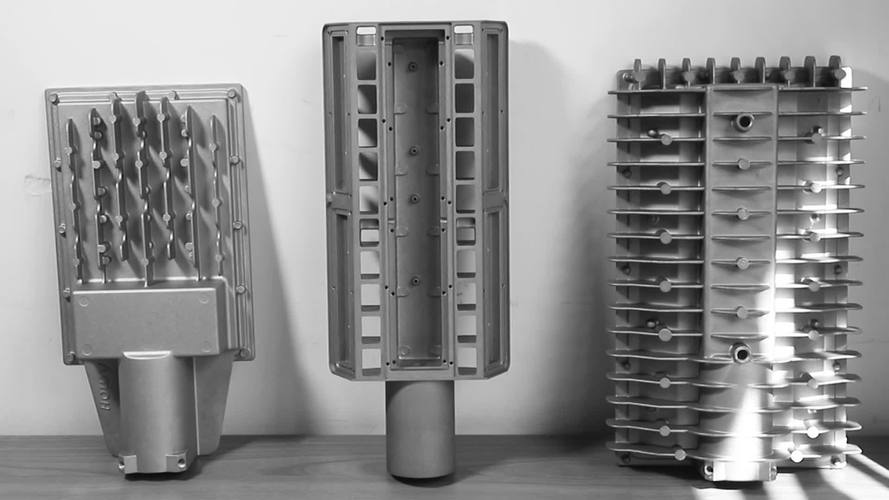
- Fin height-to-gap ratio between 5:1 to 8:1
- Staggered fin arrangements improve airflow by 15-20%
- Surface treatments (anodization) can enhance heat dissipation by 12%
2.2 Computational Fluid Dynamics (CFD) Analysis
Leading manufacturers use CFD simulations to predict thermal performance with 92% accuracy before prototyping, reducing development time by 40%.
3. Manufacturing Processes Comparison
| Method | Cost Efficiency | Precision | Best For |
|---|---|---|---|
| Extrusion | High | ±0.1mm | High-volume production |
| Die Casting | Medium | ±0.25mm | Complex geometries |
| CNC Machining | Low | ±0.02mm | Prototypes/low volume |
4. FAQ Section
How does heat sink design affect LED lifespan?
Proper thermal management can extend LED lifespan from 25,000 hours to over 100,000 hours by maintaining optimal junction temperatures.
What's the ideal surface finish for LED heat sinks?
Black anodized surfaces provide both corrosion resistance and improved radiative heat transfer (emissivity of 0.85 vs 0.05 for bare aluminum).
When should liquid cooling be considered?
For power densities exceeding 50W/cm² or in confined spaces with limited airflow.
How to calculate required heat sink size?
Use the formula: A = (Tj - Ta)/(Q × θJA) where A is surface area, Tj is junction temperature, Ta is ambient temperature, Q is heat load.
What are common design mistakes?
- Insufficient contact area between LED and sink
- Improper TIM (thermal interface material) application
- Ignoring orientation-dependent performance
5. Performance Checklist
- Verify thermal resistance meets LED specifications
- Confirm natural/forced convection requirements
- Check for proper mounting pressure (typically 50-100 psi)
- Validate corrosion resistance for intended environment
- Test for vibration resistance in mobile applications