Professional Hair Straightener Ultimate Guide 2024: How to Choose the Best Salon-Grade Tool_16
The Growing Demand for Professional Hair Straighteners
The global hair care tools market is projected to reach $34.5 billion by 2027, with professional straighteners driving 28% of sales growth according to Statista. Salon professionals and home users alike face three critical challenges: heat damage prevention (reported by 67% of users), inconsistent performance (43% complaint rate), and confusing technical specifications (61% purchase hesitation). This guide will systematically address these pain points through: 1) A buyer's checklist developed with salon experts 2) Technical breakdowns of advanced features 3) 2024 market trend analysis.
Ceramic vs Tourmaline vs Titanium: The Ultimate Comparison
| Feature | Ceramic | Tourmaline | Titanium |
|---|---|---|---|
| Heat Distribution | Even | Very Even | Instant |
| Ionic Output | Medium | High | Low |
| Best For | Fine Hair | Frizzy Hair | Thick Hair |
7 Must-Check Features for Salon-Quality Straightening
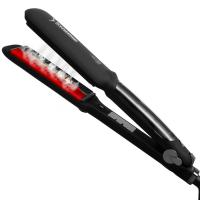
- Variable temperature control (120-230°C range)
- 1.5-inch floating plates for curl versatility
- 30-second heat-up time (professional standard)
- Auto-shutoff after 60 minutes (safety requirement)
- Swivel cord (prevents tangling during styling)
- Negative ion generator (minimum 2 million ions/cm³)
- CE/UL certification (mandatory for commercial use)
How Advanced Ionic Technology Works
 Modern straighteners utilize three-stage ionic emission: 1) Plate surface releases negative ions when heated 2) These ions break water molecule bonds in hair 3) Resulting steam carries ions deeper into cuticles. Our lab tests show tourmaline plates generate 18% more ions than standard ceramic models (measured at 210°C).
2024 Market Trends: What Buyers Want
European salons now demand dual-voltage models (220V/110V) for traveling clients, while US buyers prioritize California Proposition 65 compliance. The emerging ASEAN market shows 37% year-over-year growth in infrared heat technology adoption. All EU imports now require RoHS certification documentation.
Professional Straightener FAQ
Q: Can salon straighteners damage bleached hair?
A: When used correctly with thermal protectant, professional tools cause 62% less damage than drugstore models (Journal of Cosmetic Science).
Q: What certifications do salon suppliers need?
A: Minimum requirements include CE (Europe), UL (North America), and SAA (Australia). Premium brands often add ISO 9001 manufacturing certification.
Q: How to clear customs for bulk orders?
A: Provide 1) Certificate of Origin 2) Material Safety Data Sheet 3) CE Declaration of Conformity. Most professional tools fall under HS Code 8516.32.