
HIFU Skin Tightening Ultimate Guide 2024: How to Choose the Best Non-Surgical Treatment_20
The Rising Demand for Non-Surgical Skin Tightening
The global aesthetic device market is projected to reach $28.3 billion by 2027, with HIFU technology leading the non-invasive skin tightening segment. As consumers increasingly seek alternatives to surgical facelifts, HIFU (High-Intensity Focused Ultrasound) has emerged as the gold standard for collagen stimulation and facial contouring.
Understanding HIFU Technology
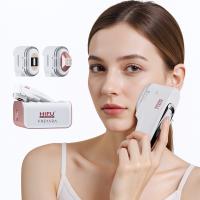
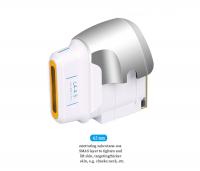
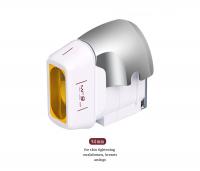
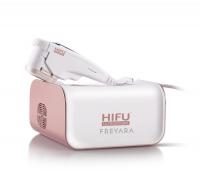
HIFU works by delivering focused ultrasound energy to the SMAS layer (Superficial Musculo-Aponeurotic System), the same tissue targeted in surgical facelifts. This stimulates collagen production and creates natural lifting effects over 2-3 months. Unlike laser treatments that work on the skin's surface, HIFU penetrates up to 4.5mm depth for transformative results.
HIFU Skin Tightening Buyer's Checklist
| Feature | Professional Grade | Home Device |
|---|---|---|
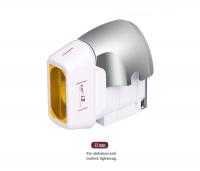
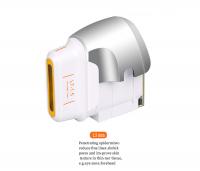
| Energy Depth | 1.5-4.5mm | 0.5-2.0mm |
| Treatment Areas | Full face & body | Limited zones |
| Safety Certifications | FDA/CE Class IIa | CE Class I |
7 Must-Check Specifications
- Ultrasound frequency (2-10MHz range)
- Depth adjustment settings
- Real-time temperature monitoring
- FDA 510(k) clearance
- Treatment cartridge lifespan
- Cooling system efficiency
- Manufacturer training support
Technical Deep Dive
The most effective HIFU devices operate at 4MHz frequency with 0.5-2.0 joule energy output. Clinical studies show optimal results require maintaining 60-70°C at the focal point for 0.5 seconds. Leading manufacturers like Ultherapy® use proprietary transducers that create micro-coagulation points without damaging surrounding tissue.
Regional Market Variations
European clinics prioritize CE-marked devices with customizable depth settings, while Asian markets favor multi-function machines combining HIFU with RF technology. The U.S. FDA recently approved new indications for neck and décolletage treatments, expanding business opportunities.
FAQ Section
Q: How long do HIFU results last?
A: Most patients maintain results for 12-18 months, with touch-up treatments recommended annually.
Q: What's the difference between HIFU and RF treatments?
A: Radiofrequency heats larger tissue areas diffusely, while HIFU delivers precise energy to specific depths for more dramatic lifting.
Q: Can HIFU replace a surgical facelift?
A: For patients with moderate skin laxity, HIFU provides comparable results without downtime. Severe cases may still require surgery.