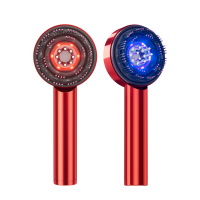
Ultimate Guide to LED Heat Sink Fans 2024: How to Choose the Best Cooling Solution_12
Ultimate Guide to LED Heat Sink Fans 2024: How to Choose the Best Cooling Solution
The global LED cooling market is projected to reach $3.2 billion by 2025, with heat sink fans accounting for 42% of thermal management solutions. As LED technology advances, proper cooling becomes critical to prevent lumen depreciation and extend product lifespan. This guide will help you navigate the complex world of LED heat sink fans through:
- Comprehensive buying guide with comparison charts
- Technical specifications explained
- Industry trends analysis
- Practical FAQ section
LED Heat Sink Fan Buying Guide
| Feature | Aluminum Heat Sink | Copper Heat Sink | Hybrid Solution |
|---|---|---|---|
| Thermal Conductivity | 205 W/mK | 385 W/mK | 240 W/mK |
| Weight | Light | Heavy | Medium |
| Cost | $$ | $$$$ | $$$ |
7 Must-Check Features for Quiet Cooling Fans
- PWM control for variable speed
- Hydrodynamic bearing system
- IP55 waterproof rating
- Noise level below 25dB
- CFM to wattage ratio
- Vibration damping mounts
- UL/CE certification
Technical Deep Dive
Modern LED heat sink fans utilize computational fluid dynamics (CFD) to optimize airflow patterns. The fin density (typically 12-16 fins per inch) directly impacts thermal resistance. For high-power applications (100W+), look for fans with:
- Die-cast aluminum housing
- Copper heat pipes (6mm diameter minimum)
- Thermal interface material with >5W/mK conductivity
Regional Market Trends
North America shows 18% annual growth in industrial-grade cooling solutions, while Southeast Asia prioritizes cost-effective models. New EU Ecodesign regulations require:
- Minimum 85% energy efficiency
- RoHS-compliant materials
- Recyclability documentation
FAQ Section
Q: Can I use standard PC fans for LED arrays?
A: Not recommended - LED-specific fans have optimized static pressure for heatsink applications.
Q: What certifications are mandatory?
A: UL 507 for safety, IP rating for moisture protection, and CE for EU markets.
Q: How to calculate required CFM?
A: Use formula: (LED wattage × 3.41) / (ΔT × 1.08) = CFM required