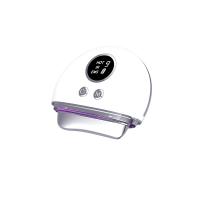
RF Beauty Machine Ultimate Guide 2024: How to Choose Professional Equipment_55
RF Beauty Machine Market Overview 2024
The global radio frequency beauty devices market is projected to reach $1.8 billion by 2027, growing at a CAGR of 8.9%. This growth is driven by increasing consumer demand for non-invasive cosmetic procedures and technological advancements in aesthetic equipment. RF beauty machines have revolutionized the skincare industry by offering professional-grade treatments without surgical intervention.
Comprehensive Buying Guide for RF Beauty Equipment
When purchasing RF beauty machines, several critical factors determine your investment's success. The market offers various technologies, each with distinct advantages for different treatment scenarios.
| Feature | Multi-polar RF | Monopolar RF | Fractional RF |
|---|---|---|---|
| Penetration Depth | 2-4mm | 10-20mm | 0.5-2mm |
| Treatment Focus | Collagen remodeling | Deep tissue heating | Skin resurfacing |
| Patient Comfort | High | Moderate | Variable |
7 Essential Features for Professional RF Machines
1. Temperature monitoring system with real-time feedback
2. Multiple handpiece options for different treatment areas
3. FDA clearance or CE certification
4. Adjustable frequency settings (0.5-2MHz range)
5. Integrated cooling mechanism
6. User-friendly interface with preset protocols
7. Comprehensive training and technical support
Technical Specifications and Operation Principles
RF beauty machines work by delivering controlled radio frequency energy to the dermal layers, heating tissue to 60-70°C. This thermal effect stimulates collagen production and promotes skin tightening. Modern systems incorporate safety features like impedance monitoring and automatic shut-off mechanisms.
Professional-grade machines typically operate at frequencies between 0.5MHz and 2MHz, with power outputs ranging from 50W to 200W. The optimal parameters depend on treatment objectives: lower frequencies (0.5-1MHz) for deeper penetration, higher frequencies (1-2MHz) for superficial treatments.
Industry Trends and Regional Market Analysis
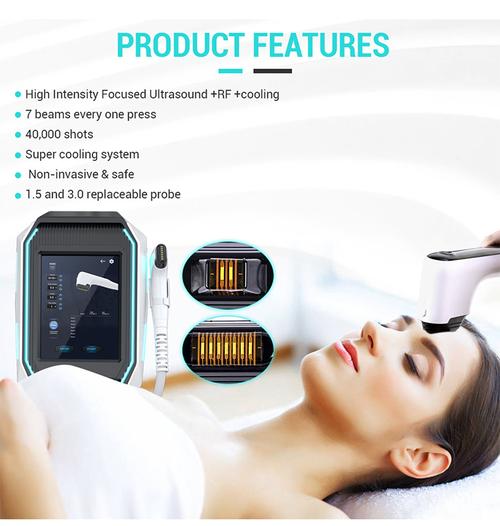
North America dominates the RF beauty device market with 42% share, followed by Europe at 28%. The Asia-Pacific region shows the fastest growth, particularly in South Korea and Japan where technological adoption rates are highest. Emerging trends include combination systems integrating RF with ultrasound, LED therapy, and vacuum technology.
Environmental considerations are increasingly important. Manufacturers are developing energy-efficient systems with reduced electromagnetic emissions. Compliance with RoHS and WEEE directives is becoming standard for international distribution.
Frequently Asked Questions
Are RF machines suitable for all skin types?
Modern multi-polar RF systems are generally safe for Fitzpatrick skin types I-IV. Advanced systems with skin type detection can safely treat types V-VI.
What certifications are required?
FDA 510(k) clearance for the US market, CE marking for Europe, and NMPA approval for China are essential. Additional certifications like ISO 13485 demonstrate manufacturing quality.
How to handle customs clearance?
Proper documentation including certificate of origin, commercial invoice, and declaration of conformity is required. Medical device classification varies by country, affecting import procedures.