Hot Air Brush vs Blow Dryer Ultimate Guide 2024: How to Choose the Best Styling Tool_3
Introduction: The Great Hair Tool Debate
The global hair care appliance market is projected to reach $34.7 billion by 2027 (Statista, 2023), with hot air brushes and blow dryers leading sales. Many consumers struggle to choose between these two styling essentials - should you invest in a multi-functional hot air brush or stick with a traditional blow dryer? This comprehensive guide will analyze seven critical comparison points, reveal 2024's top-performing models, and help you make an informed purchasing decision based on your specific hair needs.
Key Purchase Considerations
| Feature | Hot Air Brush | Blow Dryer |
|---|---|---|
| Primary Function | Styling + Drying | Drying + Styling (with attachments) |
| Heat Settings | 2-3 fixed temperatures | Variable temperature control |
| Ionic Technology | Available in premium models | Common in mid-range to pro models |
| Voltage Requirements | Usually dual voltage | Check for international compatibility |
| Best For | Quick styles, volumizing | Precision drying, salon looks |
7 Must-Check Features Before Buying
- Ceramic or tourmaline heating elements
- Voltage compatibility (110V-240V)
- Wattage (1800W+ for professional results)
- Cool shot button functionality
- Attachment variety (diffusers, concentrators)
- Cord length and swivel mechanism
- Warranty coverage (minimum 2 years)
Technical Deep Dive
Modern hot air brushes utilize ceramic-coated barrels that emit far infrared heat (140°F-390°F), while advanced blow dryers employ ionic technology to break water molecules faster. The chart below shows drying time comparisons across hair types:
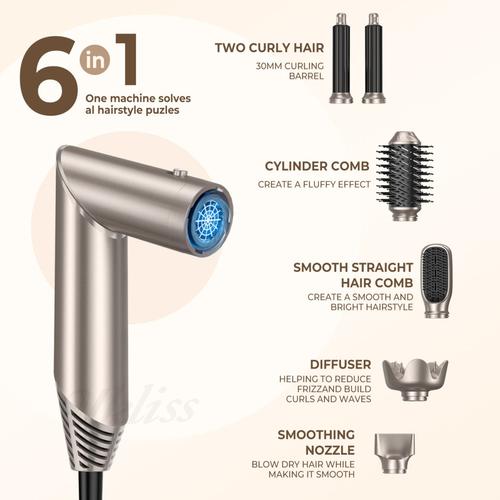
Manufacturers like Dyson and Revlon now meet EU's ERP Lot 26 energy efficiency standards, reducing power consumption by 30% without sacrificing performance.
2024 Market Trends
European buyers prioritize CE-certified models with automatic voltage detection, while North American consumers seek ADA-compliant designs. Southeast Asian markets show 47% year-over-year growth in multi-voltage styling tools (Global Beauty Report, 2024).
FAQ Section
Q: Can I use a hot air brush on wet hair?
A: Yes, but only when hair is 80% dry to prevent heat damage.
Q: What certifications should I look for?
A: ETL/UL for North America, CE for Europe, and RoHS compliance for all regions.
Q: How to clear customs for bulk orders?
A: Ensure proper HS code classification (8516.31) and include FCC/CE test reports.