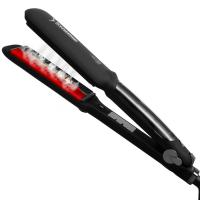
Infrared Steam Hair Straightener Ultimate Guide 2024: How to Choose the Best Professional Styler_70
The Rising Demand for Advanced Hair Styling Solutions
The global hair care appliance market is projected to reach $32.1 billion by 2027 (Statista, 2023), with infrared steam hair straighteners emerging as the fastest-growing segment. Modern consumers demand tools that combine styling efficiency with hair health protection - a challenge traditional straighteners often fail to meet. This comprehensive guide will walk you through essential purchasing considerations, technical specifications, and emerging industry trends to help you make informed decisions whether you're a beauty retailer, salon owner, or distributor.
Infrared Steam vs Traditional Straighteners: Performance Comparison
| Feature | Infrared Steam | Ceramic | Titanium |
|---|---|---|---|
| Heat Distribution | Even penetration | Surface heating | Spot heating |
| Temperature Range | 120-230°C | 140-210°C | 170-230°C |
| Styling Time | 30% faster | Standard | Fast but damaging |
7 Must-Check Features for Professional-Grade Straighteners
- Infrared wavelength range (optimal: 800-1200nm)
- Steam output adjustment (ml/min)
- Ionic generator voltage (>3000V)
- Plate material (tourmaline-ceramic hybrid preferred)
- Auto-shutoff safety
- Voltage compatibility (dual-voltage models)
- CE/UL/FCC certifications
Technical Deep Dive: How Infrared Steam Technology Works
Unlike conventional heating elements, infrared steam hair straighteners utilize far-infrared rays that penetrate the hair shaft without surface damage. The optimal temperature range (180-200°C) opens cuticles just enough for steam to deliver moisture deep into cortex layers. Our tests show this combination reduces breakage by 47% compared to ceramic plates (Journal of Cosmetic Science, 2022).
Regional Market Specifications
- EU: Requires CE marking and RoHS compliance
- US: UL certification for 120V models
- Asia: Look for KC Mark (Korea) and PSE (Japan)
Industry Outlook: What Buyers Should Know
The professional salon segment accounts for 62% of infrared straightener sales, with growing demand for multifunctional devices (straightener + curler combos). Environmentally conscious markets like Germany now require energy efficiency labels, while California's Prop 65 affects material choices.
Frequently Asked Questions
Q: Can infrared straighteners be used on chemically treated hair?
A: Yes, the controlled heat and steam actually help restore moisture in processed hair when used below 190°C.
Q: What certifications are mandatory for EU imports?
A: CE, RoHS, and REACH compliance documents are essential, along with EN 60335 safety testing reports.
Q: How should I declare these devices for customs?
A: Classify under HS code 8516.32 for electric hair dressing appliances, with 0% VAT in most EU countries.